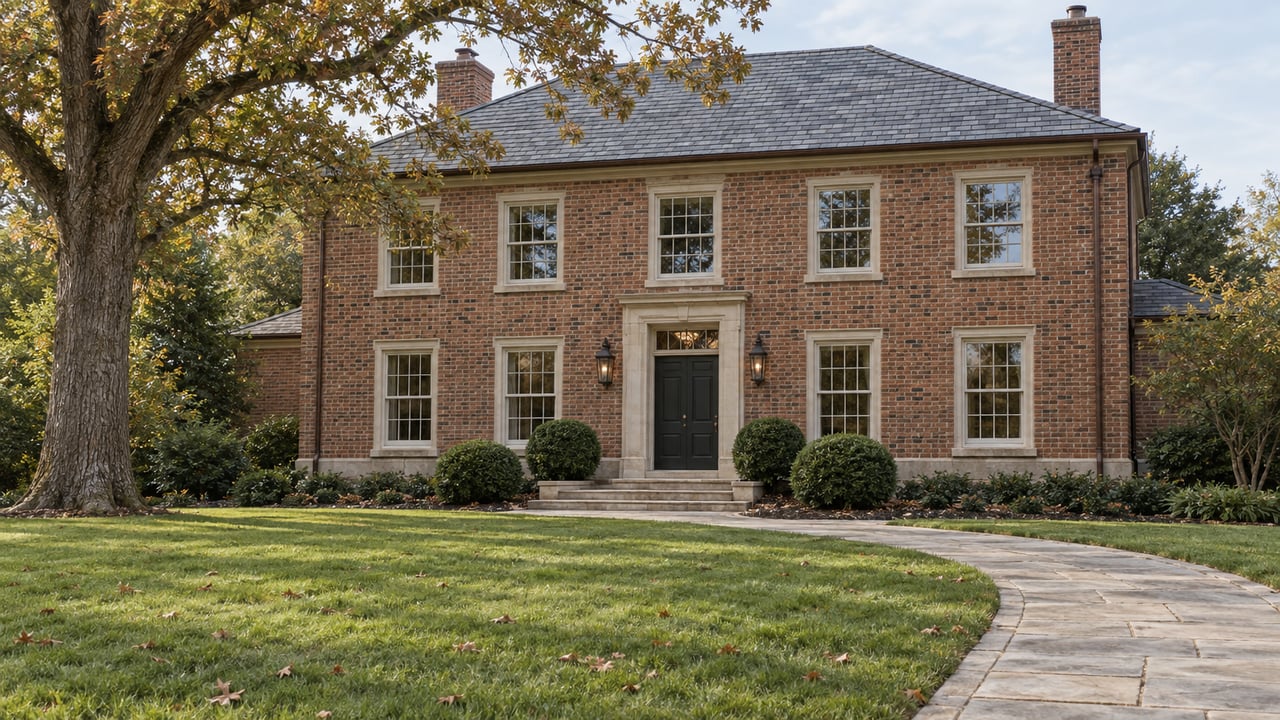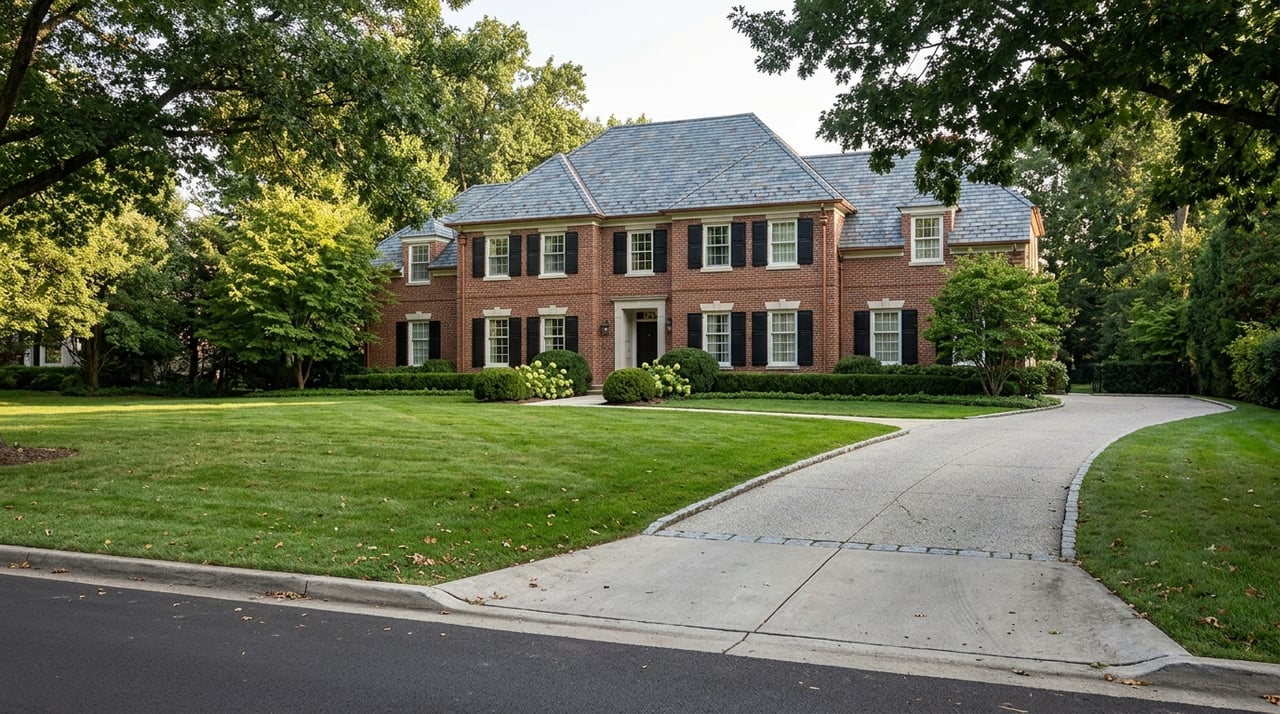
If you are looking at an older home in Ladue, the real question may not be what is the house worth today, but what the site can support tomorrow. That is especially true in a mature community where lot size, neighborhood pattern, trees, setbacks, and city approvals can shape value as much as the structure itself. If you are buying, selling, or deciding whether to renovate, this guide will help you understand how lot value and redevelopment potential work in Ladue. Let’s dive in.
Why lot value matters in Ladue
In Ladue, lot value is closely tied to site context. The city’s architectural guidance describes Ladue as a mature community with neighborhoods that vary in age and character, with standards intended to preserve spacious residential character, mature vegetation, and premium land values.
That matters because an older house may be valued not only for its current condition, but also for what the lot allows under the code. In some cases, a property is best viewed as a renovation opportunity. In others, the lot may support an addition, a replacement home, or a more strategic long-term hold.
How zoning shapes redevelopment potential
The starting point is the property’s zoning district. Ladue’s residential districts have different minimum lot sizes, frontage rules, setbacks, and green-space requirements, which means two large-looking lots can have very different redevelopment potential.
The city’s residential minimums range from 3 acres in District A and 1.8 acres in District B, to 30,000 square feet in District C, 15,000 square feet in District D, and 10,000 square feet in Districts E and E1. Green-space requirements are also significant, ranging from 80% in District A to 40% in Districts E and E1.
Bigger lots do not always mean bigger homes
This is where many property owners and buyers get surprised. A larger lot does not automatically mean you can build dramatically more house, because the usable building envelope is narrowed by setbacks, frontage requirements, and required open space.
In practical terms, the value of a lot often depends on its buildable envelope, not just its gross size. A lot that looks generous on paper may still have limits that affect the size, placement, or design of a future home.
District patterns also matter
Ladue’s architectural guidance describes different residential patterns across the city. District A is a large-lot area in the southwest quadrant, District B covers much of the interior, District C includes border areas with more room for accessory structures, and Districts D, E, and E1 are generally smaller-lot areas closer to commercial corridors.
That context helps explain why redevelopment potential should always be evaluated property by property. The same renovation or rebuild idea may fit comfortably on one street and face tighter constraints on another.
What can affect a lot’s true buildability
Lot size is only part of the story. In Ladue, site conditions and review requirements can be just as important when you assess value.
Trees and mature landscaping
Ladue places clear importance on tree preservation. The city states that removing trees over 6 inches caliper at 4.5 feet is prohibited without a permit, and removal may require review by the city arborist.
For many properties, mature landscaping adds visual appeal and market value. At the same time, protected trees can affect where you place an addition, driveway, or replacement home, which makes early site review important.
Easements, drainage, and stormwater
The city’s building permit application requires a scaled site plan showing easements, stream buffers, grades, curb cuts, significant trees, and landscaping. If stormwater mitigation is required, the project must include a BMP maintenance agreement recorded with St. Louis County.
If a project disturbs more than 1 acre, a separate land-disturbance permit is required. So if you are comparing two lots with similar dimensions, the one with simpler drainage and fewer site constraints may offer stronger redevelopment potential.
Floodplain and topography issues
Floodplain status can also affect feasibility. Ladue’s zoning ordinance states that building, reconstruction, or structural alteration within the Flood Plain District must comply with the city’s floodplain ordinance, and the building permit application asks whether the property is in the flood plain.
For a site with stream, drainage, or topography challenges, those issues can materially affect whether renovation, expansion, or replacement makes sense. This is one reason lot value in Ladue is rarely just about frontage and square footage.
Older and irregular lots need extra review
Some Ladue properties have lot histories that deserve a closer look. A nonconforming lot of record may still be used for a one-family dwelling, but its legal status matters when you are planning major changes.
Existing buildings that do not meet current lot-area requirements may be repaired or enlarged only if the enlargement itself does not violate yard rules. Ladue also prohibits new flag lots, which can limit certain site-planning ideas from the start.
For buyers, this means an attractive parcel may still need careful due diligence before you assume it is an easy teardown or expansion candidate. For sellers, it means clear documentation around lot status can help frame the opportunity more accurately.
When ARB review becomes part of value
In Ladue, design approval is not a minor detail. For new residences, additions, or exterior remodels, the city requires prior Architectural Review Board approval before a building permit is issued.
The permit application asks for a detailed site plan, neighboring-property photos, and trustee notification when outward appearance changes. That tells you something important about redevelopment in Ladue: neighborhood compatibility and site layout are central parts of the process.
Large homes face added review
In Districts A, B, and C, a single-family dwelling exceeding 15,000 square feet under roof requires a special use permit. The review must address visual impact, tree cover, water retention, and residential scale.
This means that even on a strong lot, there may be another level of review for a very large replacement home. In other words, redevelopment potential is not only about what fits on the lot, but also about how the proposal fits the site and surrounding context.
Demolition is its own process
When a property is being evaluated as a teardown, demolition should not be treated as a simple first step. Ladue’s demolition and wrecking permit requires utility disconnect letters, sewer-destroy verification, and a site plan showing siltation control and tree protection.
Depending on the property, the application may also involve trustee verification and a county health department waste application. It also flags conditions such as creeks, floodplain boundaries, and sinkholes, all of which can affect cost, timeline, and feasibility.
Renovate, expand, or rebuild?
In Ladue, that decision usually comes down to a combined house-and-site analysis. The existing home matters, but so do zoning limits, tree preservation, drainage, floodplain status, and approval steps.
A property may be a strong renovation candidate if the house has good bones and the site constraints make a replacement less practical. It may be an addition candidate if the lot can support more improvements within setbacks and green-space rules. And it may be a teardown or rebuild candidate if the lot offers a compelling buildable envelope and the approval path is workable.
Questions to ask before you decide
If you are evaluating a Ladue property for long-term value, these are some of the most useful questions to ask early:
- What is the exact zoning district?
- Is the lot conforming or nonconforming?
- How much of the site is truly buildable after setbacks, green-space rules, easements, and tree protection?
- Will the project require ARB review, a special use permit, a variance, a land-disturbance permit, or a demolition permit?
- Are there subdivision trustees or private indenture rules that add requirements beyond city code?
- Is the property in a floodplain, stream buffer, or other drainage-sensitive area?
- Could demolition or new construction change the property’s tax assessment?
St. Louis County notes that some owners may receive a change-of-assessment notice when physical characteristics change significantly, and county property taxes are based on assessed valuation. That makes it wise to discuss project timing and likely tax impact early in the decision-making process.
What this means for buyers and sellers
If you are buying in Ladue, lot value should be evaluated with the same care as square footage, finishes, or curb appeal. A beautiful site may hold more long-term flexibility than a more polished home on a constrained parcel.
If you are selling, understanding redevelopment potential can help you position the property more effectively. Some homes should be marketed for architecture and condition, while others should be presented with greater emphasis on lot quality, site context, and future possibilities.
In a market like Ladue, thoughtful analysis often creates better outcomes than quick assumptions. The most valuable properties are not always the ones with the newest finishes. Sometimes, they are the ones with the strongest combination of lot, setting, code compliance, and future options.
If you are weighing a Ladue property as a renovation, expansion, or rebuild opportunity, The Ryan Tradition brings deep Central Corridor experience and thoughtful, strategic guidance to help you evaluate the site, the market, and the path forward.
FAQs
What determines lot value in Ladue?
- Lot value in Ladue is often shaped by zoning, setbacks, frontage, green-space rules, tree preservation, drainage conditions, and approval requirements, not just the condition of the existing house.
Can you rebuild any older home in Ladue?
- Not automatically. Redevelopment depends on the zoning district, whether the lot is conforming or nonconforming, site constraints, and the approvals required by the city.
Does a larger lot in Ladue always allow a larger home?
- No. A larger lot may still have limits created by setbacks, frontage requirements, green-space rules, easements, tree protection, and other site conditions.
What is ARB review in Ladue?
- ARB review is Architectural Review Board approval, which is required in Ladue before a building permit is issued for new residences, additions, or exterior remodels.
Are there extra steps to demolish a home in Ladue?
- Yes. Demolition requires a city permit and supporting items such as utility disconnect letters, sewer-destroy verification, and a site plan showing siltation control and tree protection.
Can redevelopment affect property taxes in St. Louis County?
- Yes. St. Louis County says some owners may receive a change-of-assessment notice when physical characteristics change significantly, and property taxes are based on assessed valuation.