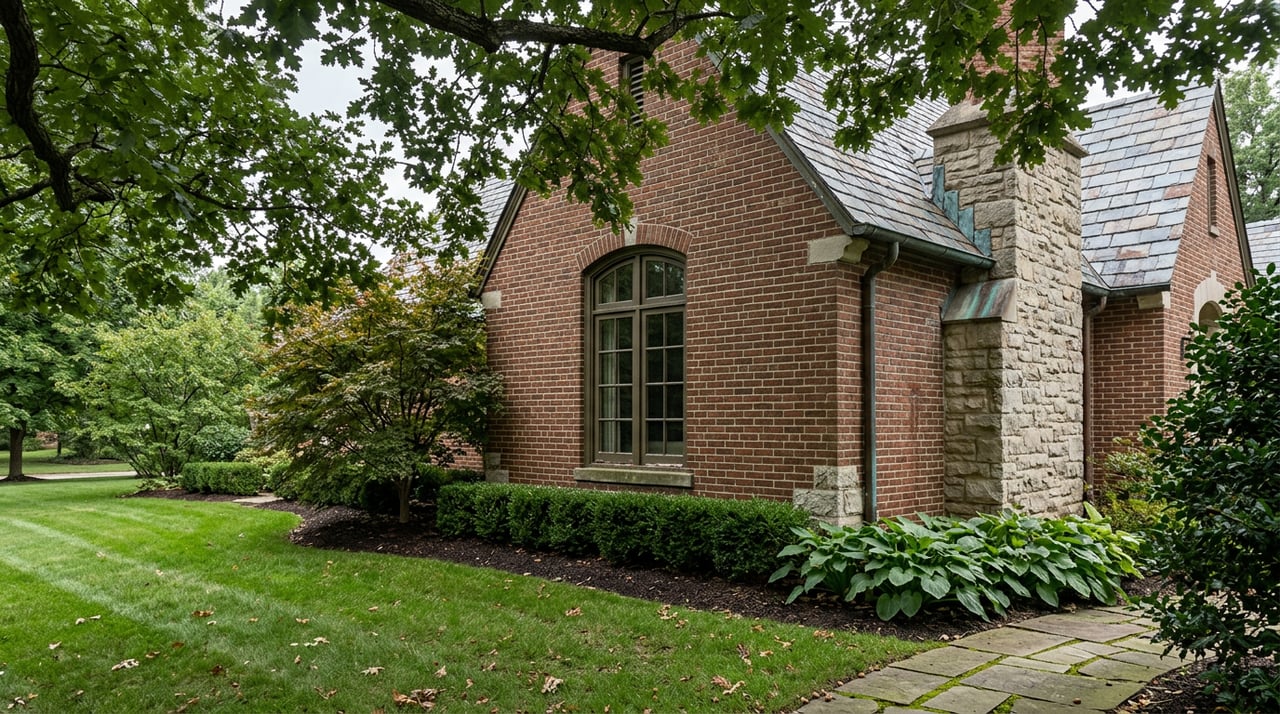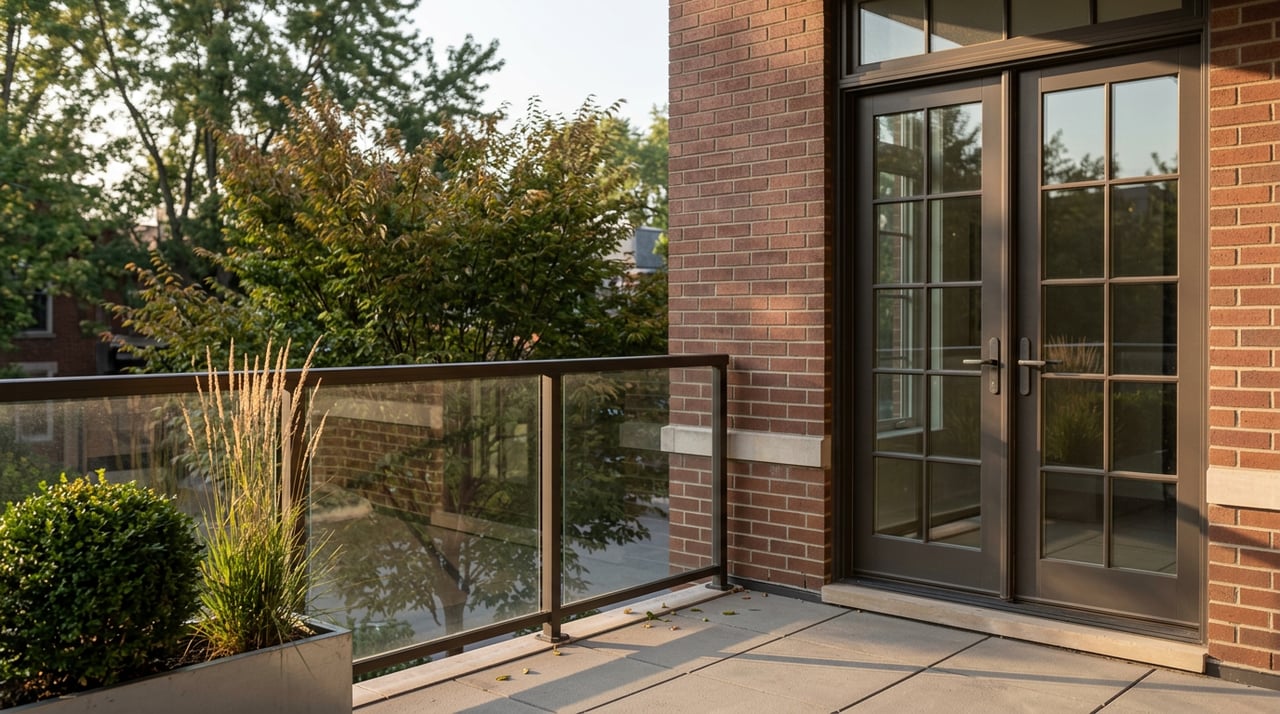
A three-bedroom unit at 8250 Forsyth Boulevard is on the market this month at $718 a square foot. Walk two blocks in any direction and you will find condos from the 1970s and 1980s asking a fraction of that. The gap looks like it is about finishes, about a wine fridge or a private terrace. It is not. The gap is about paperwork most buyers never think to request, and the building at 8250 Forsyth is the reason that paperwork suddenly matters more than it used to.
That address is Forsythia on the Park, a 38-unit luxury condominium delivered in phases beginning in fall 2025 on the site of a long-vacant building between Maryland and Parkside, directly adjacent to Shaw Park. Midas Hospitality developed it. HDA designed the four-story, 155,500-square-foot structure. Units launched in a range from $900,000 to $2.2 million, and the unit on the market this month, a 3,243-square-foot layout with four bathrooms, is priced near $2.33 million. Residents walk to Straub's for groceries and to some of Clayton's better-known restaurants without touching a car.
None of that is the story worth telling a buyer. The story is what a brand-new reserve fund buys you that an older one might not, and why Missouri law leaves that entirely up to the buyer to find out.
The one document Missouri doesn't require anyone to write
Florida requires condo associations in buildings three stories or taller to complete a Structural Integrity Reserve Study every ten years, a rule written directly in response to the Champlain Towers South collapse in 2021. Colorado passed a law in 2022 mandating reserve studies for HOAs and condo associations. Nevada requires one every five years. Missouri requires none of it.
Missouri's Uniform Condominium Act, codified in Chapter 448 of the Revised Statutes, gives an association's board the power to adopt a budget that includes reserves. It does not require the board to fund those reserves at any particular level, and it does not require a professional study to determine what that level should be. The law's only real teeth on this point show up at resale: Section 448.4-109 requires a seller to disclose, through a resale certificate, whatever reserve balance the association happens to have on the books at that moment.
In practice, this means a Missouri condo board can run a building for years without ever commissioning a reserve study, without breaking a single law, and a buyer touring that building will see none of that until someone specifically requests the resale certificate, the budget, the meeting minutes, and the assessment history. The disclosure exists. Nobody is obligated to bring it to you.
Why a brand-new building changes the comparison
A newly built association starts with an advantage that has nothing to do with square footage: its reserve fund is, by construction-loan structure and initial budget, freshly capitalized rather than accumulated over decades of board decisions. There is no thirty-year-old roof to have deferred. There is no elevator replacement someone kept postponing through three different boards. The building's youth does the work that an older association's reserve study would otherwise have to do.
That is a meaningful part of what a buyer is paying for at $718 a square foot in a building barely a year old. It is not just tall ceilings and Sub-Zero appliances. It is the absence of a specific, quantifiable risk that exists in older buildings and that Missouri law does not force anyone to measure.
The Clayton Condo Building Association, a volunteer organization representing 24 member buildings and more than 1,100 condominium units across the 63105 ZIP code, exists in large part because that risk is real and shared across the city's older stock. Buildings like Park Tower Condominium, a full-service building overlooking Shaw Park, and the high-rise known simply as the Plaza, both carry decades of board decisions behind their current dues and their current reserve balances. Those decisions are knowable. They are just not automatically shown to you.
New construction versus an established building, side by side
| New construction (Forsythia on the Park) | Established building (older Clayton condo) | |
|---|---|---|
| Reserve fund | Freshly capitalized at construction | Accumulated over years of board decisions, quality varies by building |
| Reserve study required by law | Not applicable, no operating history yet | Not required under Missouri law at any point |
| Buyer's main protection | Builder warranty, current construction standards | RSMo 448.4-109 resale certificate, requested by the buyer |
| Price per square foot (recent listing) | $718 | Varies widely by building age and finish level |
| Deferred maintenance risk | Minimal, mechanicals and roof are new | Depends entirely on board discipline, unknown without documents |
The table is not an argument for buying new over old. Plenty of buyers want the volume, the layout, or the price per foot that only an established building offers. It is an argument for knowing which column you are actually choosing, because the price difference is doing more work than the marketing suggests.
What to actually request before writing an offer
If a resale certificate exists on paper but nobody hands it to you, the fix is simple: ask for it, and read past the summary page. Specifically, request:
- The association's current operating budget and its most recent reserve fund balance
- Whether a reserve study has ever been commissioned, and if so, when and by whom
- Minutes from the last twelve to twenty-four months of board meetings, looking for any mention of deferred repairs
- A special assessment history for the building, not just the current year
- Current insurance declarations and any pending litigation involving the association
None of this requires a lawyer to interpret on a first pass. A board that has never discussed a roof, an elevator, or a facade in two years of minutes is telling you something. A board that mentions the same repair three meetings running without a funding plan attached is telling you something else. Lenders reviewing a unit for financing will ask similar questions as part of standard project eligibility review, so a buyer who already has these answers moves through underwriting with fewer surprises.
The comparison a serious buyer should make
Forsythia's arrival next to Shaw Park did not just add 38 units of inventory to downtown Clayton. It gave the rest of the market a visible benchmark for what a fully funded, no-history building looks like at today's price per square foot. Buyers who compare only the sticker price between a new unit and an older one are missing the more useful comparison: what does the reserve fund actually look like, and who is required to tell me.
In Missouri, the answer is nobody, unless you ask.
A few questions worth asking directly
Does a low HOA fee mean the building is well run? Not necessarily. A low monthly fee can reflect genuine efficiency, or it can reflect a board that has been underfunding reserves for years and will eventually need a special assessment to catch up. The fee alone does not tell you which one you are looking at.
Can I ask for the resale certificate before I make an offer, or only after? You can and should ask early. Sellers are required to provide it under Missouri law, but nothing prevents a buyer's agent from requesting it during initial due diligence rather than waiting for it to arrive as a formality late in the process.
Is a brand-new building automatically the safer financial choice? It removes one specific category of risk, deferred maintenance that nobody funded for, but it does not remove all risk. New buildings can still have construction defects, and buyers should review builder warranties with the same care they would apply to an older association's reserve history.
Buying a condominium in Clayton, whether it is a fresh unit by Shaw Park or a resale in a building that has stood for forty years, comes down to the same discipline: know what you are buying before you write the number. If you are weighing a purchase in Clayton or anywhere across St. Louis' Central Corridor and want a second set of eyes on what a building's paperwork is actually telling you, The Ryan Tradition is ready to walk through it with you.